The UAE’s Next Industrial Phase Takes Shape at MIITE 2026
Procurement mandates, AI partnerships, green certification frameworks, and financing commitments dominated discussions at Make it in the Emirates 2026.
News
- AI Reshaping Ranking and Value: Alphabet Closes In on Nvidia, Samsung Hits $1T
- The UAE’s Next Industrial Phase Takes Shape at MIITE 2026
- Trump Administration Eyes Regulatory Shift on AI as Cyber Threats Intensify
- Jensen Huang Rebuts AI Fears, Frames It as Industrial-Scale Job Creator
- Dubai Moves to Embed Agentic AI Across Private Sector Operations
- AWS and HUMAIN to Build a Full-Stack AI Ecosystem in Saudi Arabia
[Image source: ChetanJha/MITSMR Middle East]
The fifth edition of Make it in the Emirates 2026 is taking place at a time when industrial policy across the Gulf is increasingly tied to uncertainty and growing global competition. This year’s forum reflects a recalibration in how the UAE is approaching manufacturing, localisation, artificial intelligence, and economic resilience.
The UAE is moving toward an industrial model with state-backed finance, regulatory policy, technology infrastructure, and domestic production capacity being aligned more deliberately than before.
In his opening remarks, Sultan Ahmed Al Jaber said the UAE had demonstrated resilience amid regional and global volatility, supported by the leadership of President Mohamed bin Zayed Al Nahyan and a unified national response from both citizens and residents.
The centrepiece announcement was $50 billion (AED 180 billion) in new industrial procurement opportunities aimed at localising more than 5,000 products across sectors tied to economic, food, and healthcare security. The UAE is treating localisation as a primary economic development objective.
The announcement builds directly on measures approved a week earlier by Prime Minister Mohammed bin Rashid Al Maktoum to accelerate domestic manufacturing capacity and secure supply chains. Central to that package is a newly established National Industrial Resilience Fund capitalised at $272 million (AED 1 billion).
At the forum, the defence-industrial sector also featured prominently. EDGE Group and ICAPE Group signed an agreement to localise critical electronic subsystem supply chains within the UAE. As geopolitical tensions continue to expose fragilities in semiconductor and electronics supply chains, localisation in this segment becomes less about cost optimisation and more about operational continuity and sovereignty.
AI and Cyber Resilience
Artificial intelligence emerged as one of the forum’s themes, though the emphasis was less on experimentation and more on integration into industrial systems and state infrastructure.
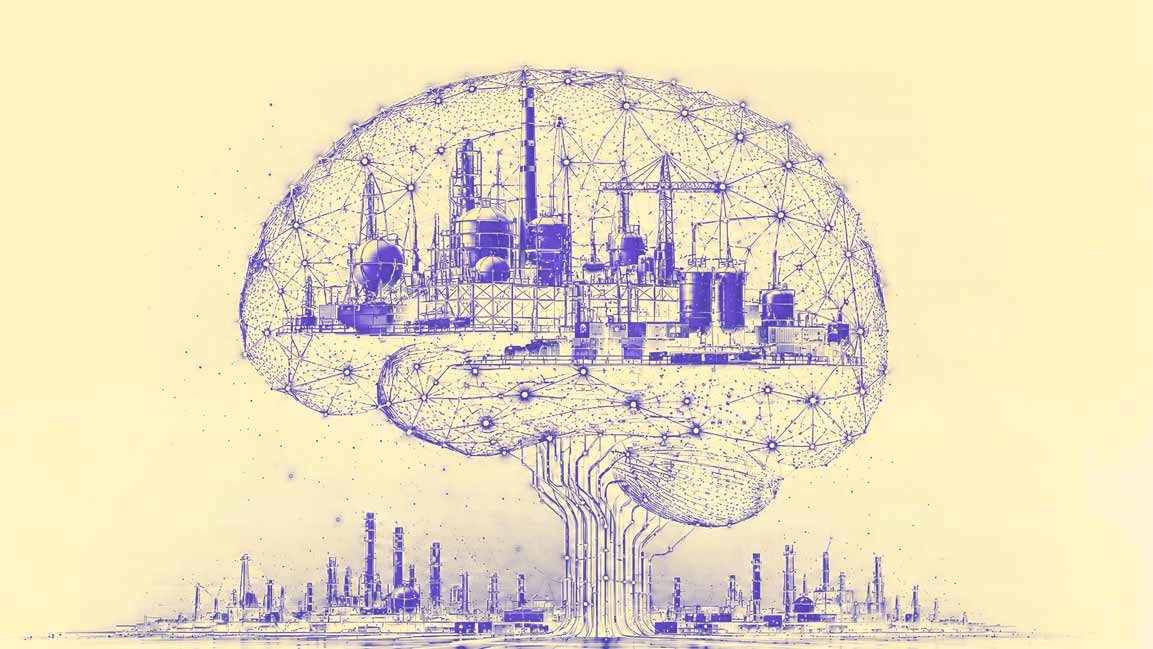
“Artificial intelligence will no longer be just a tool in our factories,” Al Jaber said. “It will become an industrial brain and a partner in decision-making.” That convergence between industrial policy and digital infrastructure appeared repeatedly throughout the event.
One of the more consequential announcements came through a planned collaboration between the UAE Cyber Security Council and IBM to establish a joint Innovation Center in Abu Dhabi focused on trusted artificial intelligence, cybersecurity, and digital resilience. This initiative becomes increasingly relevant as industrial ecosystems move toward greater automation and AI-assisted decision-making.
Energy and Finance
The forum also highlighted how financing mechanisms and sustainability policy are being folded into the UAE’s industrial strategy.
The Ministry of Industry and Advanced Technology signed agreements with Mashreq Bank and Dubai Islamic Bank with a combined financing commitment of $5 million (AED 18 billion). By aligning state-backed finance, commercial banking, and procurement demand, the UAE is attempting to reduce existing structural constraints.
Sustainability policy also featured prominently. The Ministry of Energy and Infrastructure announced the activation of Green Certificates for factories under the National Green Certificates Program. It will establish a national framework to assess industrial sustainability performance across metrics, including energy efficiency, water use, emissions, and operational quality, using AI.
The Green Certificates system also creates national performance benchmarks while linking certification to incentives and competitive advantages.
At the SME level, the Sharjah Chamber of Commerce and Industry signed an agreement with the Emirates Growth Fund to support startups and SMEs operating in national priority sectors. The partnership focuses on financing access, investment coordination, and identifying ventures aligned with industrial diversification objectives. While smaller in scale than headline industrial announcements, agreements like this help build deeper localisation ecosystems.
Research and Talent
Research capability and workforce development formed another major pillar of the forum.
Emirates Development Bank signed an MoU with Mohamed bin Zayed University of Artificial Intelligence to collaborate on executive education, internships, career engagement, and applied AI research.
The partnership enables EDB employees and leadership teams to participate in MBZUAI’s specialised AI programmes to build institutional familiarity with advanced technologies across systems.
This alignment between academia and applied industrial strategy was also evident in the innovations presented by Abu Dhabi University through its ADU Innovate platform.
The technologies showcased included Q1RAM, a quantum main memory system intended to improve processing efficiency in quantum computing environments, a solar-powered atmospheric water-harvesting system aimed at addressing water scarcity, and an autonomous multi-floor delivery platform using smart navigation.
Collectively, the announcements at Make it in the Emirates 2026 suggest the UAE is moving toward a more integrated industrial framework in which manufacturing, AI, cybersecurity, sustainability, finance, and talent development are being treated as interconnected policy domains rather than separate agendas