
Why Adventure Matters in Long Working Lives
Embracing adventure is not a diversion from a serious career. It is what allows a work life to be capable of renewal over decades.
News
- AI Dispatch | AI’s Power Players Double Down
- Anthropic Joins Frontier, Signaling AI's Entry Into Carbon Removal Markets
- 42% of Middle East Employers Are Drowning in AI-Generated Job Applications, Survey Reveals
- SpaceX to Buy Cursor Parent Anysphere in $60 Billion Stock Deal
- Nvidia's Jensen Huang Wants a New Social Contract for AI
- OpenAI's Cash Burn and Shrinking Market Share Reflect a Maturing AI Industry
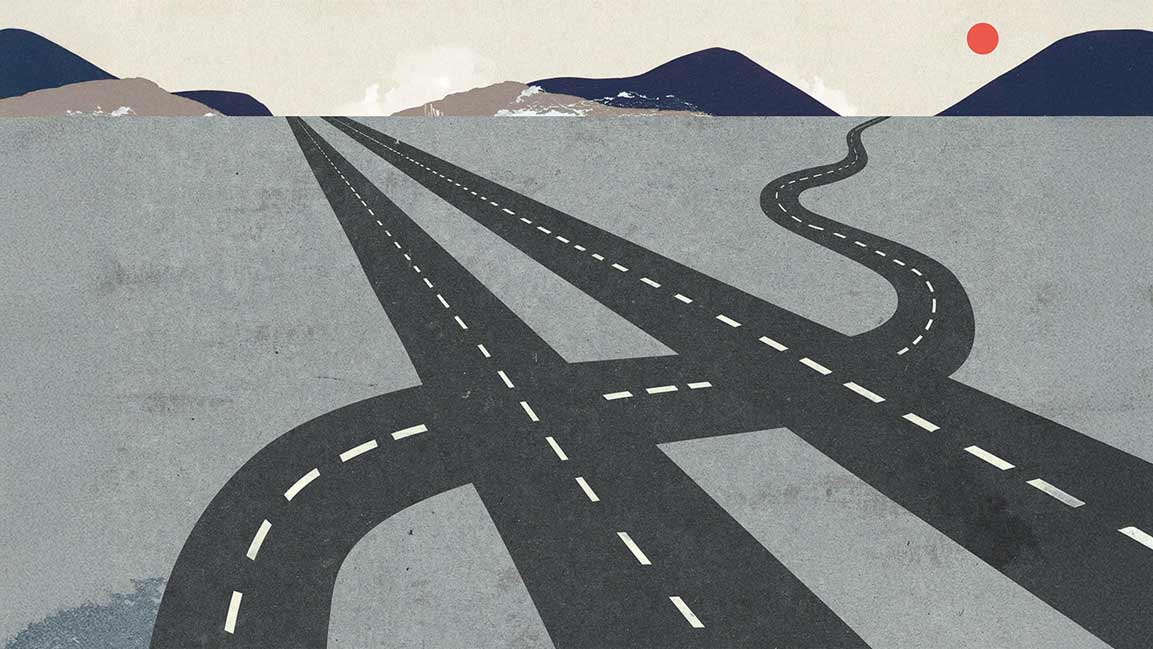
In my ongoing exploration about the patterns and changes in how people approach their working lives, I’ve found myself looking back at my own memories from over five decades of work. What stands out is not simply the steady progression of roles and achievements but the disproportionate impact of recurring moments of adventure that took me far beyond my usual experience.
At the time, these adventures each felt uncertain and sometimes even disruptive. More than that, they sat outside any clear narrative of progression. They did not register as forward movement. If anything, they felt almost indulgent: hitchhiking as a graduate student to Israel to research child-rearing practices in a kibbutz; traveling through Peru and Bolivia in my 30s; later, in my 50s, exploring countries across Africa; and now, in my 70s, journeying to India to better understand its religions.
Looking back, though, I now see these not as diversions from my working life. Instead, they were among the experiences that most shaped it.
My reflections are not unique. In conversations with others about their own long working lives, a consistent pattern emerges. People describe moments of adventure that took them beyond what was familiar. Some stepped away entirely by, for instance, spending time in a different country. Others made smaller but still disorienting shifts, such as moving into unfamiliar roles or entering settings where they were no longer the expert.
Taking these kinds of leaps becomes more important as longevity reshapes our lives. Longer lives bring both opportunity and risk. They offer more time — to learn, to contribute, to explore. But they also demand more than a single way of working, thinking, or being. In short working lives, ossification matters less. But as working lives stretch, the ability to change becomes critical. Without periods of deliberate adventure and exploration, we risk becoming locked into versions of ourselves that no longer fit the future we are moving into.
The challenge is not just endurance; it is reinvention. And reinvention does not happen accidentally.
Why Adventure Matters
Imagine that your own working life extends into your 70s. How will you make that sustainable? Many people focus on staying productive: becoming highly skilled and deeply experienced. Others recognize the importance of cultivating calm and explore the conditions and practices that sustain mental health and well-being.
Both strategies are wise. Yet the very structures that support productivity and the ability to stay calm — clear roles, established identities, well-worn habits — can, over time, make change harder.
When I talk to leaders about how they support their own longer working lives, they often emphasize the need for resilience, agility, and transformation. They rarely talk about adventure. It can sound frivolous: personal rather than organizational, or even risky in a corporate context.
Structures that support productivity — clear roles, established identities, and well-worn habits — can make change harder.
Yet when people describe their own working lives, it is often the adventures that they describe. It becomes clear how profoundly such experiences support a long working life. Here are three reasons why.
Adventure disrupts accumulated patterns.
Stepping away entirely — by spending time in a different country or working in contexts where the usual expertise offers little guidance — changes up everything. The systems are different, the cues unfamiliar, and the markers of success less clear. In these situations, choices and actions that once felt automatic become visible again.
People who put themselves in these situations describe paying closer attention — observing more closely, questioning more readily, and adapting more deliberately.
What is disrupted is not just routine but the deeper patterns of thinking and acting that have been built over years. In that disruption, something important happens: People begin to see their own habits, assumptions, and default responses from the outside.
Adventure expands who we can become.
If continuity anchors identity, then adventure unsettles it. Research on identity points to the idea of “possible selves” — the different ways we might imagine ourselves in the future. Most remain abstract. But experiences that take us beyond the familiar can make these possibilities more tangible.
New experiences expand the range of identities we can inhabit, and that expanded sense of self endures.
This shift does not happen through reflection alone. It happens through action. Imagine, for instance, a senior executive stepping away from a well-established role to spend a year working in a small, unfamiliar venture in a different country, where her experience carries little authority. For the first time, she sees another version of herself — not as a leader defined by control but as someone learning, adapting, and uncertain. Or consider a technical specialist who begins teaching and comes to see himself not just as an expert but as an educator — an identity that reshapes his future.
What matters is not just what we do now but who we can become. New experiences expand the range of identities we can inhabit, and that expanded sense of self endures.
Adventure creates markers across the life course.
Our experiences do not sit in isolation. They become part of how we make sense of our lives over time. We construct a narrative of who we are, linking past experiences with present choices and future possibilities. Within that narrative, certain moments stand out. They are revisited, retold, and used as reference points.
Periods of adventure often have this quality. A decision to step away, a move into an unfamiliar context, a break from a defined path all become the moments that stand out. They become more than memories; they become anchors in the story we tell about ourselves.
Adventures often mark a passage. They’re a point of transition from one version of ourselves to another and mark the moment when we cannot fully return to our former self. It was the Greek philosopher Heraclitus who observed that we move through time like it’s a river: If we step out of the water, it is a river with different waters and a different flow when we return to it later.
I was reminded of this when I returned to the ancient city of Petra, in Jordan, many years after first visiting it as a young traveler. The place was recognizable, but I was not quite the same. The first time, I slept on the desert floor, wandered with little knowledge, and was open to everything. The second time, I arrived more informed and more comfortable. The experience was richer in some ways, but it did not replace the intensity of that first encounter.
Years later, we return to such moments, not simply recalling what happened but using them to understand what we are capable of and what matters to us. They connect earlier and later versions of our self, allowing change to feel less like disruption and more like something we have already lived through.
The Organizational Paradox
What is striking is how unevenly these adventures are distributed. We recognize — and often encourage — adventure early in life, as part of education or early career exploration. But as our careers progress, adventure becomes harder to justify, harder to accommodate, and easier to defer. We encourage adventure at 20. We discourage it at 40 and 50.
This pattern reflects the structure of the traditional three-stage life: a period of education, followed by continuous full-time work and then retirement. Within this model, exploration is largely confined to the beginning and the end. The middle is defined by continuity, progression, and increasing specialization.
Organizations have been built around this model. They optimize for efficiency, reward consistency, and rely on predictable performance. Roles become more defined and expectations more explicit, making periods of discontinuity feel costly — for both individuals and employers.
The result is a paradox. The very experiences that most expand perspective and capability are the ones most likely to disappear, just as longer working lives make them more necessary.
As I’ve explored in my research and writing for the past few decades, people’s working lives now regularly extend into their 60s and 70s — not just among those who need to work but those who want to work too. As that happens, that three-stage structure is under strain: It becomes harder to sustain a model based on decades of continuous, unbroken work.
Emerging in its place is a multistage life — one with more transitions, more variety, and more choice. In this model, exploration and adventure are no longer confined to the edges of life. They can now occur at multiple points: between roles, across careers, or within them.
We can see this shift occurring. Sabbaticals, secondments (temporarily working a different job at the same company), portfolio careers (combining multiple jobs, income streams, and side gigs), and midlife transitions are all becoming more visible. What matters is not the specific form of this shift but the principle: that long careers require moments of discontinuity, not just continuity.
Make Space for Adventure
It is important to acknowledge that not all working lives offer the same scope for these experiences. In my own case, an academic career provided a degree of flexibility — periods of time between roles, or space to step away — that made some of my adventures possible. Many other people work within structures that offer far less room for breaks or risk-taking.
Making time for new experiences is not simply a matter of individual choice. It reflects how working lives have traditionally been organized.
Adventure is not simply a break from work. It is one of the threads that keeps a life — and a career — alive.
So for organizations, the challenge is to legitimize exploration across the life course — to create space for movement without penalizing those who step away.
Making space for adventure requires a shift in how we think about our lives and careers. We have become accustomed to valuing mastery and productivity, and adventure is often treated as optional — something peripheral rather than essential.
In longer lives, that assumption no longer holds. Adventure is not simply a break from work. It is one of the threads that keeps a life — and a career — alive. It is what allows a career to remain open, adaptive, and capable of renewal over decades. The risk is not that people take too many detours but too few.
What would your 80-year-old self ask of you? Yes — walk many steps a day, eat sensibly, sleep well. But also: Give me adventures. Give me moments I can remember, stories I can tell, conversations I can have with my grandchildren. Carve out time for extended travel or cultural immersion. Volunteer in unfamiliar contexts, in roles below your capabilities — or much higher. Ask to try a new task at work. Plan a weekend trip to someplace you’ve never been. Undertake a physically or creatively demanding challenge. Try out a self you’ve always dreamed of being. Some of these adventures are dramatic. Others are deeply personal.
In long working lives, the question is not only how long we can continue but also how often we are willing to step beyond what we know.