Topics
What to Read Next
- Could AI Be Putting CXO Roles at Risk?
- The New AI Chatbot Battleground: Who Owns the User Context?
- Why Leaders Lose the Room in High-Stakes Meetings
- UAE Marketers Lead in AI Trust But Struggle with Data Silos, Research Finds
- Google Unveils TurboQuant, a New AI Memory Compression Algorithm
- Bridge the Intergenerational Leadership Gap
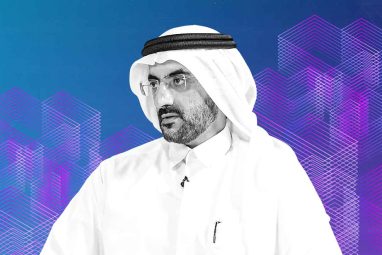
Jasim Al Awadi, Chief ICT Officer at du, explores how the UAE is strengthening its digital competitiveness through resilient ICT infrastructure, sovereign cloud platforms, and strategic interoperability.
Digital transformation at a national scale is shaped as much by infrastructure and execution as it is by vision. As the UAE accelerates toward a more diversified, technology-led economy, the focus is increasingly shifting to the foundations that enable secure, scalable, and sovereign digital services.
In the third episode of Architects of Transformation, an MIT Sloan Management Review Middle East series produced in partnership with du Tech, Jasim Al Awadi, Chief ICT Officer at du, offers insight into how the UAE’s leadership vision, combined with long-term infrastructure investment, is redefining the country’s digital operating model—and du Tech’s role within it.
Leadership Vision as the Starting Point
Al Awadi traces the UAE’s digital competitiveness back to an early and deliberate leadership mandate: technology would be a central pillar in reducing reliance on oil and enabling sustainable economic growth. This vision translated into a nationwide push for digital government, requiring all public entities to move away from manual processes toward fully digital service delivery.
That transformation built trust in the country’s digital ecosystem. Over time, it attracted global entrepreneurs and highly skilled technology talent, an outcome that was far less common in the region a decade ago. As confidence in the ecosystem grew, so did the pace of innovation across both public and private sectors.
For du, this national direction provided strategic clarity. The company aligned its own evolution with the country’s ambitions, investing in infrastructure and capabilities that would support the broader digital economy.
From Connectivity Provider to ICT Orchestrator
When du launched operations in the mid-2000s, it entered the market as a traditional telecommunications provider focused on voice and data services. As enterprise and government needs evolved, it became clear that connectivity alone was no longer sufficient.
In 2016, du started expanding beyond its core services, building capabilities across cloud, data centers, managed services, security, and advanced technologies. This progression culminated in the launch of its sub-brand strategy, with du Tech emerging publicly as a full-spectrum ICT orchestrator two years ago.
Al Awadi emphasizes that this shift was driven by operational readiness rather than branding alone. du Tech’s portfolio was built on existing customer relationships, proven delivery, and infrastructure already deployed at scale, allowing the company to bring new services to market with confidence.
Public–Private Integration in a Digital Economy
As digital adoption has accelerated, the boundaries between public and private sectors have increasingly blurred. Al Awadi notes that while the two were once more distinct, today they are deeply interdependent, relying on shared platforms, data, and infrastructure.
du Tech operates at this intersection, enabling integration through cloud platforms, data center colocation, and managed services. The COVID-19 pandemic further accelerated this convergence, validating the importance of the digital platforms built over the previous years.
Organizations that were once cautious became active drivers of innovation, pushing service providers to deliver more advanced, resilient, and integrated solutions. While public and private sectors faced different constraints, their objectives now converged around customer experience, efficiency, and service continuity.
Applying a Telco Mindset to Government Modernization
A defining differentiator for du Tech is its telecommunications heritage. Al Awadi explains that a telco mindset, built around reliability, redundancy, and “five nines” availability, has shaped how the company delivers IT and cloud services.
Unlike many IT services that operate on a best-effort basis, du Tech commits to stringent service-level agreements, even when delivering cloud-based solutions. This approach is particularly critical for government entities operating mission-critical systems.
Alongside this focus on service quality, du Tech continues to invest in local talent and emerging technologies, strengthening the UAE’s technology ecosystem while maintaining operational resilience.
Designing for Scalability and Interoperability
Scalability, according to Al Awadi, must be designed in from the outset. du Tech plans its platforms years ahead, ensuring capacity, redundancy, and interoperability are in place before customer demand peaks.
This approach minimizes service delays and ensures seamless integration between legacy systems and modern digital platforms. All services are designed in line with international best practices, reflecting the responsibility of a large-scale national provider operating in a highly competitive market.
Enabling Government Transformation at Scale
du Tech’s work with the Dubai Department of Finance illustrates how this approach translates into large-scale transformation. To simplify its market engagement, du Tech structures its portfolio around five core areas: cloud services, data center and colocation, managed services, security, and advanced technologies such as AI and IoT.
For the Department of Finance, du Tech is delivering a unified call center designed to consolidate services across multiple government entities. The objective is to provide Dubai residents with a consistent, high-quality experience when accessing government services.
Announced at GITEX 2025 and now in execution, the project incorporates cloud infrastructure, AI-driven capabilities, sentiment analysis, and advanced tooling. Al Awadi notes that delivery timelines are being met, reinforcing trust through execution rather than intent.
A Sovereign Cloud for Critical Workloads
At the center of du Tech’s portfolio is its national hyper-scale cloud platform, described by Al Awadi as the organization’s “crown jewel.” The decision to build a sovereign cloud was driven by the limitations of public cloud models for certain regulated and mission-critical workloads.
While public cloud platforms offer innovation and scale, they cannot always meet sovereignty or compliance requirements. du Tech’s hyper cloud addresses this gap by offering cloud services comparable to global platforms, while ensuring data residency and regulatory alignment.
Launched in July 2025, the platform already provides access to more than 170 Oracle OCI services within a sovereign environment. Early adopters include Dubai Taxi Company, with further onboardings underway. The platform has also enabled software vendors to serve government and regulated sectors that were previously inaccessible.
Regulated Innovation in Digital Assets
One of du Tech’s most distinctive offerings is its regulated cloud mining service for Bitcoin, the first of its kind in the region. Al Awadi explains that the initiative followed extensive due diligence, aligning with the UAE’s progressive regulatory stance on virtual assets and the establishment of the Virtual Assets Regulatory Authority.
From an infrastructure perspective, cloud mining leverages du Tech’s strengths in data centers and compute services. From a market perspective, it addresses trust and capital barriers that previously limited participation.
The service saw strong uptake during its initial soft launch, with broader public availability planned following the first quarter.
Redefining Technology Leadership
The evolving scope of du Tech’s portfolio reflects a broader shift in the Chief ICT Officer’s role. Beyond managing networks and systems, the role now involves incubating emerging technologies, balancing risk, and making long-term investment decisions.
Al Awadi notes that many innovations undergo years of internal development before launch, and not all of them reach the market. This disciplined approach is reshaping technology leadership and accelerating talent development, exposing teams to increasingly complex technologies and transformation programs.
Preparing for the Next Phase
Future readiness at du Tech is guided by focus rather than breadth. The company continues to concentrate investment in defined priority areas, including AI, cloud, managed services, IoT, data centers, and digital asset infrastructure.
Through selective incubation, long-term planning, and alignment with national priorities, du Tech is positioning itself to support the UAE’s next phase of digital transformation—building infrastructure not just for today’s services, but for tomorrow’s demands.