Topics
What to Read Next
- U.S. Businesses Turn to Chinese AI Models as Cost Pressures Mount
- Stack Overflow's Decline Signals a Bigger AI Knowledge Problem
- The Hidden Cost of AI-Assisted Creativity
- AI Token Costs Must Drop 90% to Scale Enterprise Adoption: Palo Alto CEO
- Saudi Enterprises Rebuild Technology Stacks as AI Adoption Accelerates: Nutanix
- AI Dispatch: Bets and Warnings Define the Week
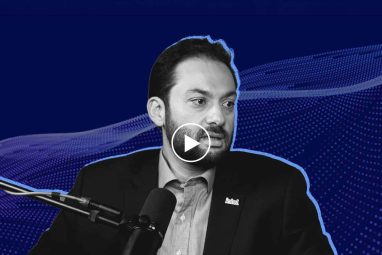
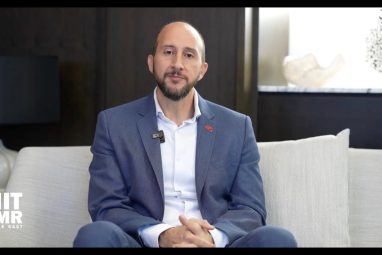
In this interview, Mouteih Chaghlil, CEO of Bespin Global MEA, breaks down the challenges and opportunities facing enterprises and governments as they adopt multi-cloud and hybrid strategies.
Enterprises and governments across the Middle East are embracing the power of multi-cloud and hybrid architectures, yet navigating their complexity demands more than just technical know-how.
According to Mouteih Chaghlil, Chief Executive Officer, Middle East and Africa (MEA) at Bespin Global, the region is at a turning point. “Multi-cloud is absolutely doable—this is something cloud has been designed to do—but it starts with understanding what the client is trying to achieve,” he explained. “There are tools, programs, and blueprints available to support these environments. But it all comes back to requirements and goals.”
In this interview, Chaghlil also explores:
- How are client demands around data localization changing your advisory approach?
- What differentiates cloud transformations that succeed versus those that stall after initial migration?
- As AI and edge computing accelerate, how must cloud strategies evolve beyond today’s architectures?
Chaghlil also cautions against common misconceptions. “Cloud is not just another co-hosting platform—it’s not just moving from one data center to another. It’s a full ecosystem. If the workloads aren’t modernized and the people and strategy aren’t aligned, projects will stall.”
The full interview is also available on YouTube. Watch it to explore how cloud partnerships are enabling next-generation infrastructure in the region.