

What to Read Next
- NVIDIA Deepens AI Push With $5 Bn Intel Stake, $20 Bn Groq Deal
- What VCs Expect from Enterprise AI in 2026
- Manus Joins Meta in Major Bet on Autonomous AI Agents
- AI Job Losses Could Accelerate By 2026, Geoffrey Hinton Warns
- Top 10 MIT SMR Middle East Articles of 2025
- Where 2025’s Biggest AI and Cloud M&A Deals Landed
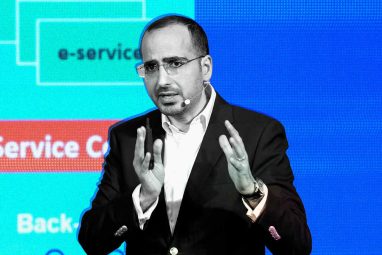
In this interview for MIT SMR Voices, Steve Plimsoll, AI expert in Saudi Arabia, explores AI's transformative potential, emphasizing data, workflows, and scalable infrastructure for long-term success.
“AI isn’t something you just plug into what you do today,” says Steve Plimsoll, a leading AI expert in Saudi Arabia. “It should be changing the entire end-to-end process.” This insight reflects a critical aspect of Saudi Arabia’s approach to artificial intelligence: focusing on fundamental transformation rather than superficial integration.
Under Vision 2030, the Kingdom is investing heavily in AI education, infrastructure, and ethical frameworks. Accredited degrees in AI, training programs for professionals, and initiatives like Elevate, which trains 25,000 women in AI skills, demonstrate a comprehensive strategy to prepare the workforce for the future.
Plimsoll says that success in AI relies on three pillars: quality data, reimagined workflows, and scalable infrastructure. “Good data governance and an openness to redesign processes are essential,” he explains. Saudi Arabia is tackling these challenges head-on, leveraging cloud adoption and ethical AI frameworks to ensure robust and culturally relevant solutions.
In an interview for MIT SMR Voices, Plimsoll also elaborates on:
- The challenges organizations face when implementing machine learning and experimenting with advanced AI use cases.
- Predictions for AI advancements in the next three to five years.
As Saudi Arabia continues to lead with bold initiatives and a clear vision, Plimsoll’s message is clear: AI isn’t about quick fixes—it’s about reshaping how we work, think, and innovate.