

In an AI-Driven World, Al Olama Makes the Case for Cognitive Breadth
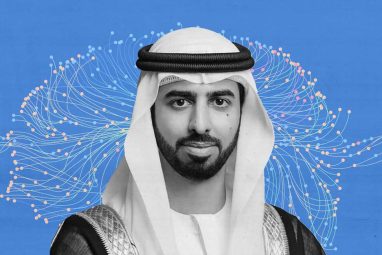
His Excellency Omar Sultan Al Olama asserts that those aged 40-60 today are the best generation. “Due to AI and the internet, we’ve lost something called the breadth of intelligence.”
News
- In 5 Years, Everyone Will Have an AI Companion, Says Mustafa Suleyman
- Talent Boomerang: Mira Murati’s Thinking Machines Loses Two Co-Founders to OpenAI
- YouTube Allows Parents to Limit Kids’ Shorts Viewing Time
- What Scott Adams' Dilbert Got Right About Power at Work
- Salesforce Rolls Out Slackbot as an AI Agent
- Zoho Launches First Middle East Data Centers in UAE

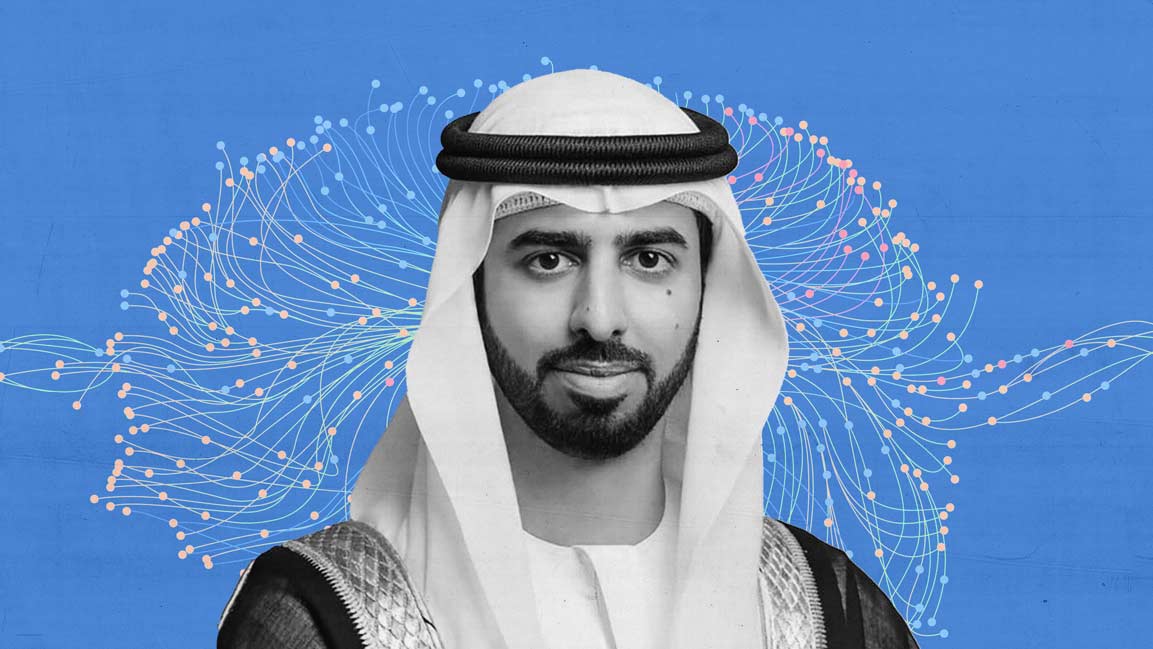
When the UAE appointed a Minister of State for Artificial Intelligence in 2017, it was not just creating a new portfolio—it was signaling how seriously the country viewed AI as a key tool in its national strategy. At the center of that decision was Omar Sultan Al Olama, now globally recognized for helping define what AI governance can look like at a state level. He was appointed long before AI entered mainstream conversation—well before tools like ChatGPT and terms such as large language models, artificial general intelligence, and agentic systems became part of everyday vocabulary.
By appointing Al Olama, the United Arab Emirates made an early institutional bet on AI—one that is now translating into measurable outcomes. By 2025, the country ranked among global leaders in AI adoption, AI infrastructure, government technology initiatives, and digital transformation.
The trajectory, however, was not linear. Long before he took on the AI portfolio, Al Olama had little interest in public office. “I didn’t want to become a minister. I wanted to become the richest man in the world,” the Minister of State for Digital Economy, A.I. and Remote Work Applications recalled in a recent “WTF Is” podcast episode with Zerodha co-founder Nikhil Kamath.
The wide-ranging interview saw the 35-year-old minister discuss his journey into public office and AI’s growing role in shaping governance.
The Making of a Minister
Al Olama’s entry into government in 2012 was neither straightforward nor immediately attractive. After impressing officials at the Prime Minister’s Office, he accepted an entry-level role. Despite his father’s encouragement to pursue a stable government career, he remained hesitant.
“So, I came to my mother, and I told her, ‘Mom, I got this offer in Dubai. I’m not sure I’m gonna take it. What do you think?’ And I still remember what she said to me. She said, ‘Omar, there are places you’d work only if they paid you. Then there are places where you would pay to work at,” he shares.
Recognizing his eagerness to make a difference and contribute to society, HE Mohammad Abdullah Al Gergawi, Minister of Cabinet Affairs in the UAE, encouraged Al Olama to build his network. “With the right connections, you’ll gain access to funding and knowledge,” he emphasized.
Being Remembered Beyond Time
“Why does it matter what happens to your name beyond your time?” When Kamath threw this existential question at him, the minister said, “You shouldn’t strive for being remembered for the wrong reasons or for being remembered for the sake of remembrance. You have to be remembered by the value you create.”
Earlier in November, during a fireside chat with Kamath at the Indian Global Forum Middle East 2025, Al Olama shared how, while serving his three years of military service as a minister, he realized that, at the end of the day, what mattered to people was their next meal, not how AI was going to transform industries. “What really matters to people is, first, the necessities. And as the government, we need to operate to first fulfil that, then look at things like AI,” he said.
The Secret Sauce of Dubai
The Middle East, particularly the United Arab Emirates and Saudi Arabia, has been lauded for effectively managing an economy that brings together multiple nationalities in a peaceful manner. “Do you think the same political system could work for 100 million people?” asks the Zerodha co-founder.
“The hardest thing ever is to manage a country where a vast majority of the populace comes from every walk of life, from every country in the world. There is a sweet spot. Managing a billion people is very difficult, while managing a hundred million people is less challenging. I wouldn’t say it’s easy, but if you have the right populace, if you have the right country, it actually leads to incredible power and results,” Al Olama says.
He notes that the system works not because it is easy, but because the fundamentals were established from the outset.
“Everyone comes here because the value this country creates for them, their livelihoods, and their future is higher than anywhere else on Earth. Today, we’re not attracting only those looking for a living between paycheques. We’re attracting people from every walk of life—the top of the pyramid to the bottom of the pyramid,” he adds.
The UAE is a popular destination for expats and tourists, driven by its high living standards and a safe, welcoming environment that transcends religious, gender, and national boundaries. “The government shouldn’t be in your face. This is something that we believe in. The government is here for a purpose, and that is to ensure every single day that your quality of life is better tomorrow than it is today,” he notes.
Breadth of Intelligence
Today’s generation is plagued mainly by the Dunning-Kruger effect, a cognitive bias in which people with low ability vastly overestimate their competence, fueled by the heightened use of social media. One can argue that the technology works in this generation’s favour; however, Al Olama begs to differ.
The Minister asserts that those aged 40-60 today are the best generation. “Due to AI and the internet, we lost something called the breadth of intelligence,” he said.
“Back then, people had this to get by and live their daily lives… We actually don’t know many things that a generation older than us knows,” he said. He argues that the necessities of life are the challenge. Back then, one needed to understand the environment, nature, and technology, and apply a breadth of intelligence into the relevant field.
“That is why you see that even people who were less educated were able to build billion-dollar companies.”
AI’s Detrimental Effect
The absence of deep cognitive thinking in the age of technology has led us to be hyper-focused and specialized. Al Olama feels “AI is going to beat us to the target.” “If you have to be hyper-specialized, AI can do that better than us. The only way you can stand a chance is if you have the breadth of knowledge,” he said.
A decade ago, at 25, Al Olama was entrusted with running a leading global government summit. “His Highness Sheikh Mohammed didn’t believe that you need to be a certain age to do something. He gave everyone a chance.” He advises younger generations to move beyond specific intelligence towards broad intelligence and be adept at multiple things.
Contrary to Kamath’s view that the easiest jobs are the last to be replaced, the Minister states that this can’t be said with absolute conviction. “We are speculating that your chances are higher if you know more things.”
Citing the RentAFriend phenomenon, a Japan-popularized platonic, social networking website where people can hire companions for various activities, Al Olama said, “Although we are gaining a lot with the improvement of AI, we’re losing a lot with social interaction.”
AI models have advanced exponentially in the past five years. This, however, has negatively impacted human interactions by fostering digital isolation and reducing the need for face-to-face communication.
AI of the Future
The UAE’s dependence on oil significantly decreased in 2025, with non-oil sectors contributing over 77% to the real economy, driven by diversification and innovation. However, oil remains crucial to growth, supporting sectors such as construction, finance, and AI.
“AI will be pervasive. It’s going to be completely invisible. It’s going to be everywhere, but it’s not going to be in our faces. We will see certain elements of it,” he says. He feels it will be the new electricity, running through everything we use in our lives.
However, he remains cautious. “With that level of intelligence, we will be able to outsource many decisions. I don’t know if that’s a positive thing, but many decisions are going to be outsourced to the machines.”
The UAE’s AI ambition is to become a global leader in AI by 2031 through its National AI Strategy, focusing on integrating AI into key sectors such as government and healthcare, fostering innovation, attracting global tech investment, developing talent, and building AI infrastructure to diversify its non-oil economy.
“I believe, whether it’s power or money, whatever you have, if you wield it in the right way, you can have the right impact,” he concludes.