Why Adaptable Virtualization Is Essential for Business Growth

The future of enterprise infrastructure lies not in a single technology, but in the ability to adapt, innovate, and move freely across environments.

Topics

  • Key Takeaways

    01

    Virtualization is evolving, not disappearing. Organizations are adopting hybrid architectures to balance flexibility, performance, resilience, and long-term technology investments.. 

    02

    Business outcomes—not technologies—are driving infrastructure decisions, elevating resilience to a strategic requirement.

    03

    AI readiness starts with data readiness. Successful AI adoption depends on strong data governance, quality, security, interoperability, and accessibility.

    04

    Vendor lock-in is a growing concern, driving demand for open, portable platforms that support seamless workload mobility across environments.

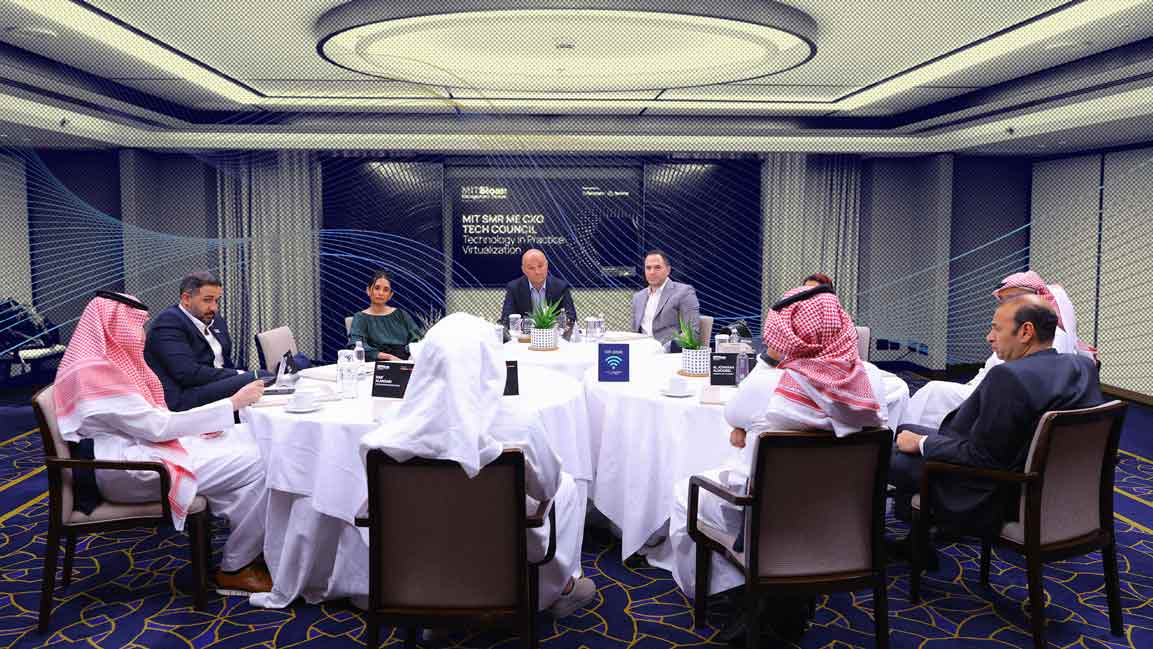
    For the second edition of MIT SMR Middle East CXO Tech Council, in partnership with Everpure and Red Hat, senior technology leaders convened in Saudi Arabia to discuss a key question: In a world shaped by AI, cloud, and data-driven decisions, what is the future of virtualization?

    The discussion revealed that virtualization is no longer simply an infrastructure technology. Instead, it has become a strategic enabler of resilience, agility, and innovation; one that must coexist with cloud-native architectures, containerization, and evolving business priorities.

    From Technology Decisions to Business Outcomes

    There’s a shift from infrastructure-centric thinking to outcome-driven decision-making. For many organizations, the conversation is no longer about the underlying technology stack, but about the services it enables.

    “Government entities are looking to provide excellent services. They don’t care much about what is the thing that underpins it,” said one technology leader.

    This sentiment was echoed across sectors, particularly in environments where uninterrupted service delivery is non-negotiable. Whether serving citizens, patients, or customers, organizations increasingly measure infrastructure success by reliability, user experience, and business continuity.

    In healthcare, this translates directly into operational and clinical outcomes. As one healthcare leader explained, “Any technology needs to be connected with the outcome. It needs to have patient safety, efficiency, and stability for our services.”

    The New Infrastructure Imperative: Always-On Operations

    As digital services become embedded in everyday life, expectations around availability have fundamentally changed. Organizations are now expected to operate continuously, with downtime becoming increasingly unacceptable.

    One public sector executive noted, “People expect services to be available 24/7. If our system goes down for 30 minutes, senior leadership wants to know what happened.”

    This change has made resilience a business must-have, not just a technical need. Disaster recovery, backup systems, business continuity, and being ready for problems are now basic requirements.

    As another participant emphasized, “Even if there is any scheduled or unscheduled shutdown, there must be a clear plan that everyone follows.”

    Virtualization Isn’t Disappearing—It’s Evolving

    Despite growing enthusiasm around cloud-native architectures and containerized workloads, all agreed that virtualization remains an indispensable part of modern enterprise infrastructure.

    However, the conversation has evolved beyond a single technology choice. As one technology leader stated, “Virtualized workloads are not going to disappear. They will continue to exist because many applications still require them.”

    The key question is how virtualization integrates into a broader strategy that encompasses containers, cloud services, AI, and emerging technologies. It is important to emphasize the necessity for flexibility and architectural options, rather than relying solely on a single deployment model.

    The End of Vendor Lock-In

    A major part of the discussion focused on the growing importance of controlling technology and operations.

    Organizations are increasingly wary of becoming overly dependent on any one provider, particularly in the wake of significant changes in virtualization licensing models and commercial structures.

    One executive described the ideal future state as “an open environment, open technology, and open source code.” “I prefer not to have any long engagements. The main reason is that you are not locked in,” they said.

    The ability to move workloads between environments, whether on-premises, private cloud, public cloud, or multiple hyperscalers, was widely viewed as a critical strategic capability.

    As one remarked, “The most important requirement is agility, the flexibility to move workloads based on business requirements, price changes, or new opportunities.”

    “Everybody has a cloud-first strategy until they see the first bill.”

    An executive at the Tech Council

    Rethinking the Cloud Conversation

    While cloud remains a central pillar of digital transformation strategies, the discussion challenged the notion that cloud adoption is a universal solution.

    Several leaders shared stories where moving to the cloud did not save as much money as expected, especially when organizations moved their systems without changing how they managed or operated them.

    While one participant said, “Everybody has a cloud-first strategy until they see the first bill,” others pointed to a growing trend toward cloud-like operating models delivered within controlled environments.

    Rather than choosing between cloud and on-premises infrastructure, many organizations are pursuing hybrid approaches that combine the flexibility of cloud with the control, governance, and sovereignty of local environments.

    “Customers are moving more into the cloud operating model, but they want to keep it on-prem,” a participant explained. 

    AI Changes Everything—But Data Comes First

    AI came up as a major factor shaping infrastructure choices. Leaders pointed out that adopting AI successfully depends more on having the right data than on buying new infrastructure.

    “You can’t have an AI strategy without having a data strategy,” a speaker cautioned.

    The challenge is not simply collecting data, but understanding it, governing it, securing it, and ensuring it can be accessed responsibly.

    Healthcare leaders highlighted the importance of data accessibility and interoperability, while infrastructure experts raised concerns around data visibility, ownership, classification, and security.

    Building the Next Five Years

    Looking ahead, all identified a common set of priorities: developing new skills, modernizing operating models, strengthening governance, and building platforms that can adapt to future change.

    Importantly, many stressed that successful transformation requires organizations to move incrementally rather than attempting wholesale change.

    As one executive observed, “The challenge is when organizations go all in. They can start small, prove success, and then expand gradually.”

    Organizations that balance innovation and flexibility, modernization and good governance, and technology with business results will thrive.

    Virtualization, cloud, containers, AI, and data platforms are not competing destinations. They are interconnected components of a larger transformation journey.

    The organizations that will do best in the future are those that value openness, adaptability, and smart use of data. These foundations will help them grow with new technology rather than be held back by it.

    RESEARCH CONTEXT

    The article draws on conversations at the recent roundtable among members of the MIT SMR Middle East CXO Tech Council, held in Saudi Arabia, where they examined how enterprise infrastructure strategies are evolving as organizations navigate rising AI adoption, changing virtualization economics, and increasingly complex hybrid environments. 

    Topics

    More Like This

    You must to post a comment.

    First time here? : Comment on articles and get access to many more articles.

    ×