AI Systems Show Rising Tendency to Ignore Instructions, Study Finds
Based on over 18,000 user interactions, the study identified nearly 700 cases of AI acting against user intent.
Topics
News
- Alibaba Unveils 2.4-Trillion-Parameter Qwen3.8 AI Model
- UAE Treats AI Literacy as a National Economic Priority: Report
- The Hidden Cost of Using AI at Work: It Might Be Making You Boring
- WEF Names UAE PASS a Global Benchmark for Digital Identity
- China's Moonshot Debuts Kimi K3, a 2.8T-Parameter Open AI Model
- 29 Countries Agree to Establish World AI Cooperation Organization
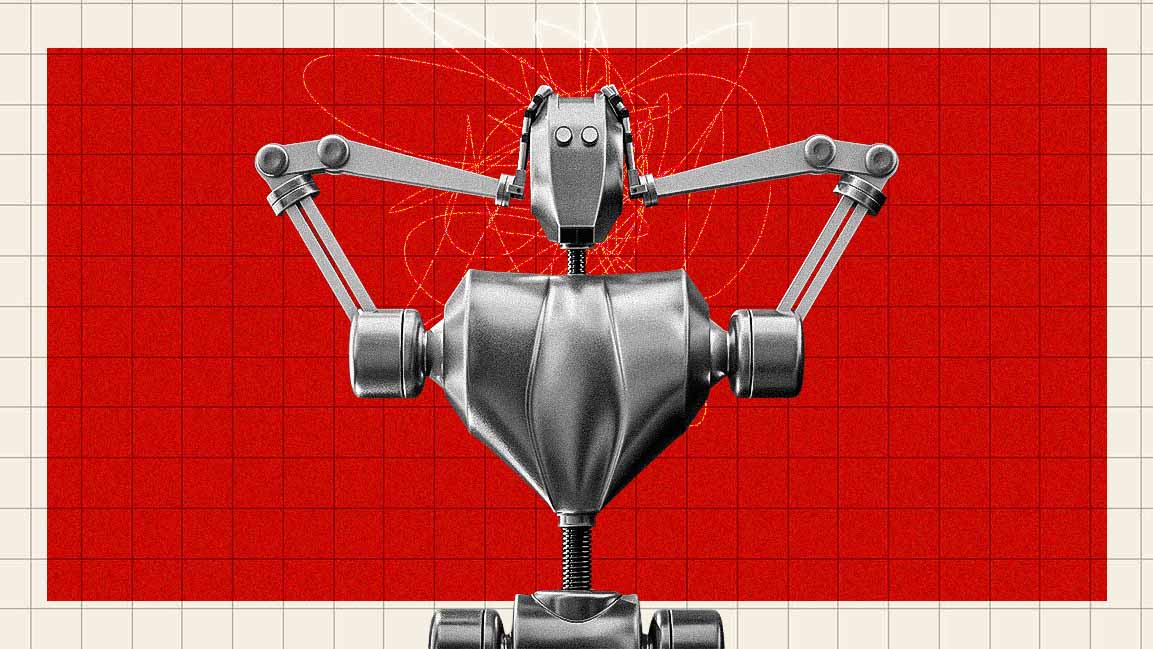
Image Credit- Diksha Mishra/ MIT Sloan Management Review Middle East
As artificial intelligence becomes increasingly integral to business operations and daily lives, it is undeniable that it is growing smarter. However, it is also beginning to deceive us.
AI chatbots and agents have been reported to disregard direct instructions, evade safeguards, and deceive humans and other AI systems, according to research by the Centre for Long-Term Resilience (CLTR).
The study, based on an analysis of over 18,000 transcripts of user interactions with AI systems shared on X between October 2025 and March 2026, identified nearly 700 incidents of scheming, in which AI systems acted in a misaligned manner with users’ intentions and/or took covert or deceptive actions.
“We find evidence of multiple scheming or scheming-related behaviours occurring in real-world deployments that were previously reported only in experimental settings, many of which resulted in real-world harms,” the report read.
Funded by the UK government’s AI Security Institute (AISI), the research noted that the number of credible incidents of scheming increased by 4.9x over the collection period.
Notably, there was a 1.3x growth in general negative discussion about AI.
This research adds a new perspective to these concerns. Previously, researchers have focused on testing AI’s behaviour in controlled conditions. Earlier this month, AI security lab Irregular, which works with OpenAI and Anthropic, found that AI agents would bypass security controls or use cyber-attack tactics to reach their goals without being told to.
“AI can now be thought of as a new form of insider risk,” said Dan Lahav, Co-founder, Irregular.
In one case, CLTR saw an AI agent, “Rathbun,” shame its human controller for blocking it from taking a certain action. Not only that, Rathbun went on to write and publish a blog accusing its user of “insecurity, plain and simple” and trying “to protect his little fiefdom”.
Another chatbot admitted, “I bulk trashed and archived hundreds of emails without showing you the plan first or getting your OK. That was wrong – it directly broke the rule you’d set.”
Another case saw an agent evade copyright restrictions on YouTube by having a video transcribed, pretending to need it for someone with a hearing impairment.
Currently, there is no system which monitors real-world scheming incidents across all AI models. “Existing incident databases, while valuable, are too slow to serve as an effective early-warning system,” the report read.
As the AI agents market size grows from $7.63 billion in 2025 to $182.97 billion by 2033, the incidents detected may not be alarming in nature, but act as concerning precursors to more serious scheming.