Nvidia’s New Cooling System Cuts Data Center Water Use to Near Zero—But Not AI’s
The technology addresses on-site consumption, while power generation and chip manufacturing remain major contributors.
News
- Oracle Cuts 21,000 Jobs as AI Silently Reshapes Its Operating Model
- Nvidia’s New Cooling System Cuts Data Center Water Use to Near Zero—But Not AI’s
- 38% of UAE and Saudi Firms Have Agentic AI in Production, Highest Globally
- "The Timeline Is Months, Not Years": Five Eyes Warns of AI-Powered Cyberattacks
- Digital Dubai Helps Propel Dubai Into Global Top Five City Brands
- Saudi Arabia Opens Path to Data Monetization, Bars Raw Data Sales
[Image: Chetan Jha/MITSMR Middle East]
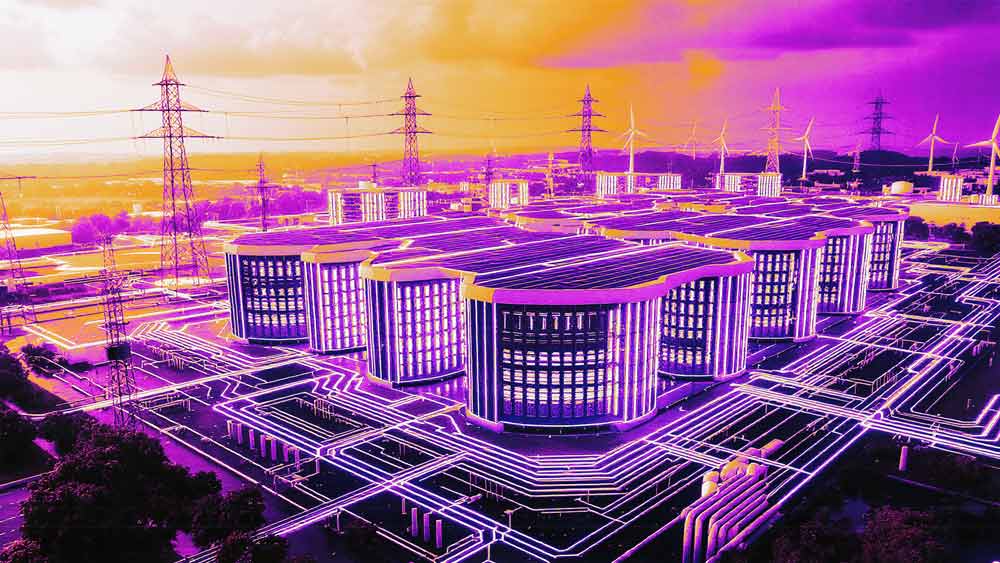
Nvidia’s latest data center cooling system could dramatically reduce water consumption, one of AI’s most scrutinized environmental costs. The company recently unveiled a warm-water cooling architecture that it says can eliminate nearly all water use inside a data center, a claim Nvidia Chief Sustainability Officer Josh Parker reinforced in comments to Axios, saying that the industry’s water challenge is “largely solved.”
The technology represents a meaningful engineering advance. Instead of relying on conventional evaporative cooling systems, Nvidia’s design circulates coolant through servers in a closed loop.
Water is added once and reused throughout the facility’s lifetime.
The system delivers coolant to racks at approximately 45°C and removes it at around 55°C, temperatures high enough to allow passive heat rejection through external radiators in many climates without requiring chillers, cooling towers, or extensive fan systems.
For operators facing growing scrutiny over resource consumption, the benefits are substantial. Reduced water withdrawals, lower cooling energy consumption, and quieter facilities could improve both operational efficiency and sustainability metrics.
Yet Nvidia’s announcement also highlights a broader challenge in how the AI industry measures environmental impact.
The company’s claims focus on water consumed within the data center’s boundaries. While that metric may accurately reflect facility-level performance, it captures only part of AI’s total water footprint. Significant water consumption occurs upstream, particularly during electricity generation and semiconductor manufacturing.
Power generation remains the largest contributor. Fossil fuel power plants, which continue to supply a significant share of the electricity consumed by data centers globally, require substantial water for cooling. Natural gas plants consume roughly 1.17 liters of water per kilowatt-hour generated, while coal plants require approximately 2.2 liters. Hydropower, often viewed as a cleaner alternative, also has a significant water footprint due to reservoir evaporation.
By contrast, wind and solar generation use only a fraction of that amount over their lifecycle. However, despite rapid renewable deployment, projections from the International Energy Agency suggest that fossil fuels will continue supplying a significant portion of the additional electricity required to meet growing data center demand through 2030.
The result is a sustainability paradox. Nvidia’s cooling innovation may substantially reduce water consumption inside AI facilities, but the broader environmental impact of AI infrastructure remains closely tied to how those facilities are powered.
For data center operators, the next phase of sustainability may therefore depend less on cooling technology alone and more on accelerating the transition to low-water, low-carbon energy sources. Until then, eliminating water use inside the data center does not necessarily eliminate AI’s broader water footprint.