Decoding Gen Z at Workplace: Are Leaders Evolving Fast Enough?
As Gen Z enters traditional workplaces, they encounter values misaligned with their priorities, and norms that social media immediately labels as “toxic.” What will this mean for the future of work?
News
- Jeff Bezos Pushes for AI Overhaul of Amazon Prime Video
- AI Demand Fuels Intel's Fastest Revenue Growth in 15 Years
- AI Dispatch: As Global Burns Cash, Local Builds Trust
- Jordan Nears Full Digital Government as 85.5% of Public Services Go Online
- Alphabet's AI Push Delivers Growth, but Spending Weighs on Cash Flow
- Saudi Arabia's AI Startups Outperform Global Counterparts, AWS Study Reveals

[Image: Chetan Jha/MITSMR Middle East]
Key Takeaways
01
Gen Z’s values diverge sharply from hiring norms.
Gen Z ranks self-care and expression far above achievement, which can create friction from day one.
02
Social media is warping expectations both ways.
Heavy exposure to “toxic workplace” content gives Gen Z a sharper vocabulary for bad management, but also risks labeling normal friction as dysfunction.
03
The exit is fast and costly.
Shorter patience cycles mean attrition within the first 6–12 months is rising.
04
The fix is structural, not generational.
Unclear roles, inconsistent management, and absent feedback loops go before Gen Z entered the workforce.
Last September, NYU professor and business journalist Suzy Welch authored an op-ed in a reputable newspaper about Generation Z (Gen Z)—individuals born between 1997 and 2012—entering the workforce. She posed a straightforward question to readers: Is Gen Z unemployable?
Welch’s critique, based on research and her personal observations, was that Gen Z’s values often conflicted with those expected by hiring managers. The values prized by hiring managers—achievement, learning, and a strong desire to work—are priorities for only about 2% of the Gen Z candidates.
The vast majority of Gen Z ranked self-care as a top value, followed by authentic self-expression, and then altruism, with achievement, learning, and workcentrism occupying the 11th, 10th, and 9th spots, respectively.
“I’d be lying if I said values didn’t have consequences. The data shows that to increase your chances of advancing professionally, three values [achievement, learning, and workcentrism] have the power to make it happen. Gen Zers can opt in—or out,” she wrote on a LinkedIn post addressing the feathers her article ruffled.
Is Gen Z opting in to the previous generation’s employment gold standard, or will it stand out and forge its own?
Research Context
- Suzy Welch / NYU Survey: Among Gen Z students surveyed, only ~2% ranked achievement, learning, and work-centrism as top values — while the majority prioritized self-care and authentic self-expression ahead of professional advancement.
- Intelligent.com (2024, 900+ U.S. business leaders): Six in ten employers reported avoiding Gen Z candidates due to professionalism concerns; an equal share admitted to already having fired Gen Z hires from college, citing lack of motivation, poor communication, and struggles with feedback.
- Deloitte Gen Z & Millennial Survey (2025): Gen Z ranked their generation’s mental health as the second-highest societal concern and cited managers’ failure to provide development, mentorship, and support for work-life boundaries as a core gap.
- Broken Marketplace Study (2025): 70% of Gen Z in the U.S. were turning to social media as their primary source of career advice. In this channel, extreme workplace narratives consistently outperform balanced narratives in terms of reach and engagement.
- Gallup (2025): Post-pandemic revaluation of work culture — including expectations around flexibility, purpose, and psychological safety — has accelerated and shows no signs of reverting to pre-2020 norms.
Gen Z and the Modern Workplace
Humans tend to assign greater weight to negative experiences than positive ones, a phenomenon psychologists call negativity bias. In today’s hyperconnected world, workplace grievances can quickly move from private conversations to public scrutiny. Although employee dissatisfaction is nothing new, social media has amplified discussions around “toxic” workplace practices, making such stories a recurring feature of news cycles and online discourse.
In February, a WhatsApp chat between a manager and an employee went viral on X. The manager told the employee to arrive at the office by 6:30 am for a 7:00 am virtual meeting and warned that failure to attend would constitute insubordination. The employee calmly replied that he would attend the meeting virtually. He added: “Threatening suspension over location rather than attendance feels less like policy and more like PowerPoint abuse.”
The comments on the viral post were divided, with some siding with the employee and noting a shift toward “Gen Z rewriting workplace rules.” In contrast, others criticized the attitude, with one advising, “If you try to play semantics when your employer tells you to be at a meeting physically, you’re about to learn a very valuable lesson in power dynamics.”
Building on Welch’s point about Gen Z’s different values, many things that Boomers or Millennials saw as normal—such as strict 9-to-5 hours, minimal appreciation, job insecurity, unpaid overtime, and lack of flexibility—are now labeled “toxic” by the new generation.
Revaluation of work culture—in ways once thought impossible—became more prevalent post-pandemic, according to a 2025 Gallup report.
“Content around ‘toxic workplaces’ is highly visible online and can shape how Gen Z perceives work even before they enter the workforce, often highlighting extreme or isolated cases that may not reflect everyday organizational realities.”
— Anil Singh, Chief Business Officer, TASC Outsourcing
Is Gen Z ‘Wrong’?
In the above-mentioned X post, a user noted that he had let go of six Gen Zs in the past year because of this mentality. “(They) think they’re above their pay grade. They’re not.”
Sonia Mahajan, Associate Director of Human Resources at HROne, recently highlighted a challenge many HR leaders are facing with Gen Z talent. In a blog post, she recounted a conversation with a fellow HR professional whose team had lost three high-potential Gen Z hires within six months. The reason, as her colleague put it, “Not for better pay. Not for bigger titles. They left because weekly one-on-ones felt more like interrogations than conversations.”
Is Gen Z’s attitude toward work wrong? Are they seeing normal workplace issues as ‘toxic’?
Ganesh Shenoy, CHRO at Eruditus Group, points out that today’s workforce includes four generations, each bringing different expectations, experiences, and strengths. “Gen Z, in particular, has grown up with access to a wide range of workplace narratives, both positive and challenging, which naturally shape how they approach employers,” he says.
“Compared to earlier generations, they are less likely to assume and more likely to question.”
While self-aware and clear about acceptable conditions, Gen Z isn’t high on companies’ hiring list. A 2024 survey by Intelligent.com found that six in 10 companies were avoiding hiring Gen Z candidates due to professionalism concerns, with poor communication skills, lack of eye contact, and an inability to engage in basic workplace small talk cited as the major concerns.
Digital Narrative Influencing Future Workforce?
On Instagram, #WorkTok has over 40,000 posts, while on TikTok, it has amassed over two billion views. Content related to corporate life and the workplace has been gaining traction, with pages dedicated to exposing toxic work practices.
Is excess visibility on social media platforms resulting in perception bias?
“Content around ‘toxic workplaces’ is highly visible online and can shape how Gen Z perceives work even before they enter the workforce, often highlighting extreme or isolated cases that may not reflect everyday organizational realities. This can sometimes lead to expectations being formed around worst-case scenarios, making it harder for early-career professionals to distinguish between genuine workplace issues and normal aspects of professional growth, such as feedback, accountability, and performance pressure,” says Anil Singh, Chief Business Officer, TASC Outsourcing.
For Lindsay Ellis, a leadership consultant, “toxic workplace” content shapes expectations, but not always negatively. Instead, such content can raise awareness of behaviors that should no longer be normalized, such as poor leadership, a lack of boundaries, or unsustainable workloads.
In 2025, 70% of Gen Z in the US were turning to social media for career advice, according to the Broken Marketplace Study. In this space, Loe Whaley, in addition to creating content focused on corporate culture, boundary-setting, and career advice, is best known for her “How to Professionally Say” series, which translates direct or frustrated thoughts into polite, professional language.
Despite its advisory nature, substantial social media content amplifies cynical scenarios.
“The challenge is that social media often highlights extreme cases. This can create a skewed perception where every inconvenience or misalignment is labeled as “toxic,” rather than part of the natural complexity of working in teams, organizations, and structured environments,” Ellis says, adding that for some Gen Z employees, this can lead to lower tolerance for normal workplace friction.
“Online content often amplifies extreme cases, which can make systemic issues appear more widespread than they are, leading young professionals to approach employers with greater caution. However, this caution reflects a stronger focus on transparency, fairness, and alignment with personal values — not disengagement,” adds Singh.
For Shenoy, it cuts both ways. “On one hand, constant exposure to more extreme workplace stories can create a perception that dysfunction is more widespread than it may be. That can sometimes lead to heightened sensitivity, even in situations that are part of normal workplace complexity. On the other hand, it has helped raise the baseline for what should not be acceptable, such as poor management practices, a lack of respect, or opaque decision-making. In that sense, it has encouraged companies to reflect and evolve,” he says, adding that expectations aren’t unrealistic, but more defined and less forgiving of ambiguity.
Understanding the workplace context is critical as well. “Many early-career professionals haven’t yet developed the experience to differentiate between a tough environment and a truly unhealthy one,” he added.
“Where organizations tend to struggle is when this is framed as a ‘generation problem’ rather than a systems opportunity.”
— Ganesh Shenoy, CHRO at Eruditus Group
Discontent Gen Z’s Impact on the Workplace
Expected to make up 74% of the global workforce by 2030—along with Millennials—Gen Z’s perceptions of the workplace and work culture cannot be dismissed. Discontent among them is profoundly reshaping traditional workplace structures, accelerating a shift from a culture of overwork to one centered on psychological safety, equity, and personal well-being.
Deloitte’s 2025 Gen Z and Millennial Survey revealed that Gen Z ranked their generation’s mental health among their top societal concerns, second only to the cost of living and above protecting the environment, unemployment, and political instability.
However, that does not discount the financial and business losses firms incur due to the evolving nature of Gen Z’s workplace expectations. “We’re seeing shorter patience cycles; if expectations aren’t met early, disengagement can set in quickly. In some cases, attrition within the first 6 to 12 months has increased,” shared Ganesh.
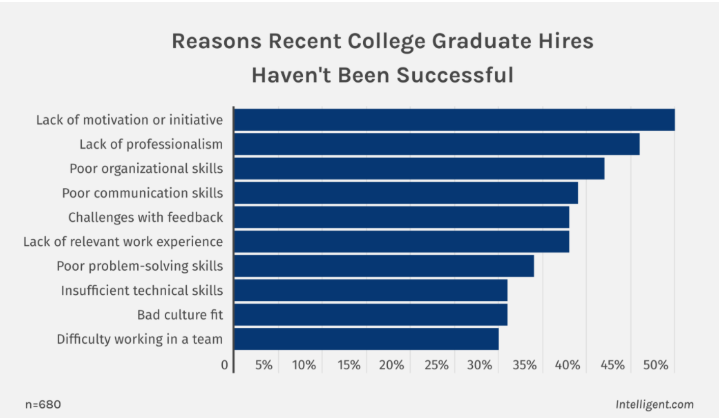
Six in 10 employers, according to Intelligent.com’s survey of over 900 U.S. business leaders, admitted they had already sacked the Gen Z workers they had hired fresh out of college. Notably, one in six hiring managers said they were hesitant to hire from this cohort.
The top reasons these hires did not work out were a lack of motivation or initiative, poor communication skills, and a lack of professionalism, followed by struggles with feedback and inadequate problem-solving skills.
Filling a vacant role often incurs huge costs. Frequent turnover results in companies repeatedly spending on job ads, headhunters, and onboarding without gaining a return on these investments. However, for Shenoy, this phenomenon cannot be solely attributed to Gen Z. “In many ways, it is surfacing structural gaps that may have existed earlier but were often overlooked.”
“Where organizations tend to struggle is when this is framed as a ‘generation problem’ rather than a systems opportunity,” he added.
Team dynamics also take a hit. “When some employees prioritize flexibility or faster advancement while others operate under more traditional expectations, it can create tension, misalignment, and even resentment within teams,” says Ellis.
How are Companies Adapting to Help Gen Z Adjust?
Gen Z and Millennials hold high expectations for their employers, yet many feel their managers fall short of their needs. Some believe companies are not doing enough to reduce workplace stress.
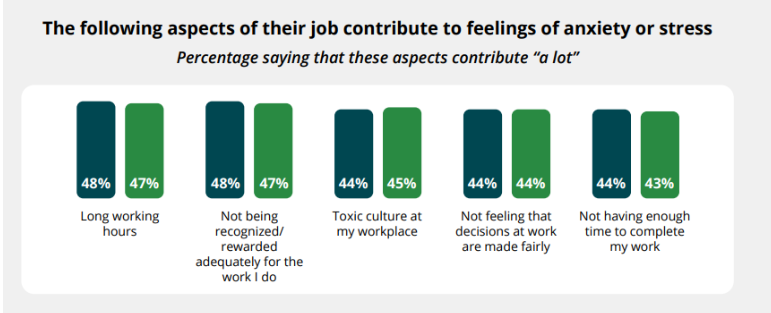
The shift has gone from “onboarding people into roles” to “onboarding people into how work actually works.” Ganesh and Eruditus have remodeled their practices to appeal to Gen Z.
1. Manager’s Capability at the Center of It
Gen Z feels their managers are falling short. They believe managers should guide, support, inspire, mentor, and help set boundaries for work/life balance. But many perceive managers as mostly focused on daily oversight. “Gen Z doesn’t necessarily leave companies; they tend to leave managers faster than previous generations. Increasingly, we’re also seeing a stronger expectation for managers to play a more active role in development, offering guidance, mentorship, and clarity, not just oversight,” Shenoy says.
2. Purpose, Performance, and Growth
For Gen Zers and Millennials, job hopping isn’t driven by a lack of loyalty but by stability, better work-life balance, a greater sense of purpose, and the opportunity to learn and acquire new skills. Purpose drives motivation and engagement, and 89% of Gen Zs and 92% of Millennials say it’s key to job satisfaction and well-being.
Over half (54% of Gen Z and 53% of Millennials) prioritize meaningful work when choosing employers. “We are far more explicit about what good performance looks like, how decisions are made, and what growth paths realistically involve. Ambiguity can often create anxiety for this cohort,” he adds.
3. Two-way Feedback Loops
Organizations with regular, open feedback loops significantly improve employee retention and performance. And this practice goes beyond fulfilling Gen Z’s expectations. Instead of annual surveys, organizations should focus on continuous listening through regular pulse checks, skip-level interactions, and informal feedback channels.
4. Learning Path
Learning and development are priorities for both groups, and they expect their employers to provide these opportunities. Seven in ten Gen Zs say they are developing skills to advance their careers at least once a week. Practice is everything. “Early careers come with mistakes and uncertainty. We consciously communicate that discomfort is part of growth, and not a sign of failure or dysfunction,” Ganesh says.
The Future of Workforce
Culture will also play a key role in redefining the workplace. “Employers need to define what a healthy, high-performing workplace actually looks like. Most importantly, companies are working to align culture with reality. That means fewer empty statements about values and more visible behaviors from leadership that reinforce trust, recognition, and accountability,” says Ellis.
An environment where open conversations about mental health and well-being are the norm, alongside other concerns, will likely yield organizational benefits and a happier, more engaged workforce.
Ellis explains the phenomenon: “In many ways, Gen Z isn’t breaking the workplace; they’re showing why it needs to evolve.”
“It can be easy for managers to buy into typical stereotypes of Gen Z and dismiss them entirely; however, companies have an equal responsibility to prepare recent graduates for their particular workplace and give them the best chance to succeed,” says Huy Nguyen, Chief Education and Career Development Advisor, Intelligent.com.
What Leaders in Each Role Must Do Differently?
C-Suite | Leaders should assess whether their culture aligns with what they publicly claim to offer. The gap between stated values and lived experience is now a measurable risk to attrition and cost. |
HR & People Leaders | Onboarding must shift from role orientation to workplace fluency, thereby setting clear expectations around feedback, accountability, and growth. Continuous listening mechanisms should replace annual surveys. |
Managers | The role must evolve from task oversight to active mentorship, offering clarity on performance, growth paths, and decision-making. Ambiguity drives disengagement faster with this cohort than with any previous one. |
Boards & Governance | Rising attrition among early-career hires carries compounding costs. Boards should ask whether workforce culture is being monitored as a business risk, and whether management capability is being built with the same rigor as financial or operational performance. |