OpenAI, Anthropic & Microsoft CEOs Call for Stricter Laws Against AI Biothreats
While AI is supercharging biotech advancements, it could potentially help bad actors create the next healthcare crisis.
News
- UAE Treats AI Literacy as a National Economic Priority: Report
- The Hidden Cost of Using AI at Work: It Might Be Making You Boring
- WEF Names UAE PASS a Global Benchmark for Digital Identity
- China's Moonshot Debuts Kimi K3, a 2.8T-Parameter Open AI Model
- 29 Countries Agree to Establish World AI Cooperation Organization
- AI Skills Now Feature in 1 in 30 Gulf Job Vacancies, Up Nearly 3x Since 2022: Report
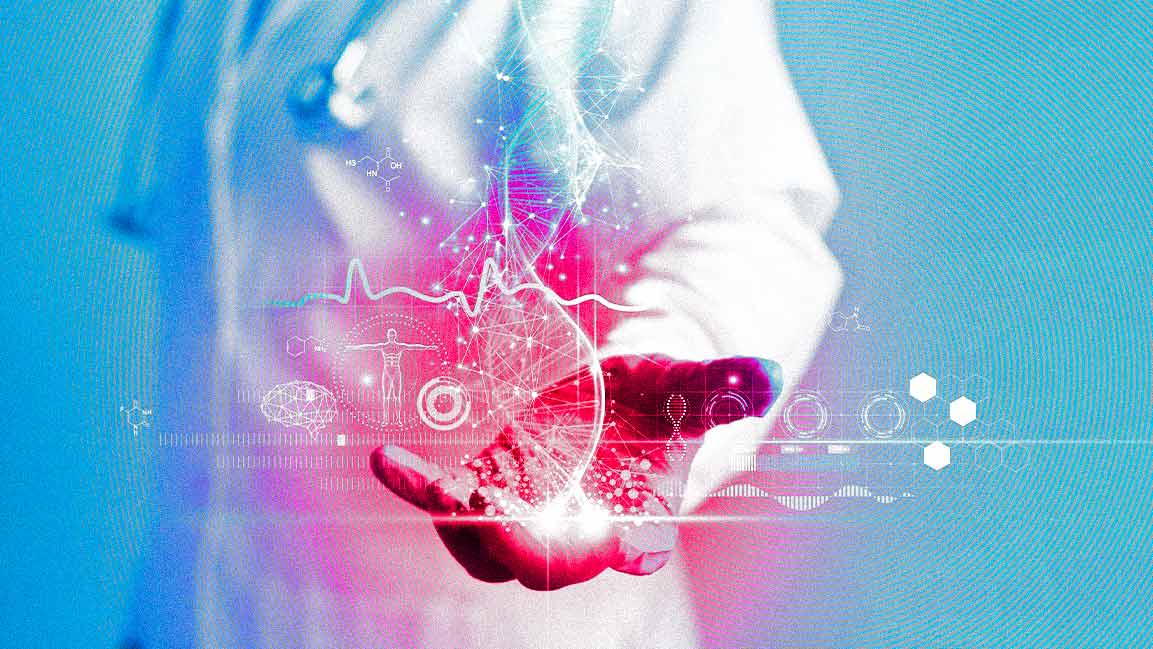
Artificial intelligence has greatly eased public access to information. However, this change has raised concerns among AI leaders and experts. In a public letter to the US Congress, OpenAI CEO Sam Altman, Anthropic CEO Dario Amodei, Microsoft AI CEO Mustafa Suleyman, and over 50 signatories urged safeguards in the handling of synthetic DNA and RNA, essential components for developing vaccines and other biotech innovations.
The signatories also include scientists, national security experts, and executives from gene synthesis companies.
“AI systems are improving rapidly, and alongside incredible benefits to science and medicine, there is a real possibility that the knowledge barriers which have historically prevented bad actors from obtaining biological weapons will meaningfully erode,” the letter said.
Experts noted that while the ability to order synthetic DNA online had accelerated vaccine development, there exists a blind spot where a bad actor could theoretically order DNA sequences to reconstruct dangerous viruses.
While synthesis companies have had voluntary screening since 2009, it isn’t universal.
“We call on legislators to make screening of orders for synthetic nucleic acids — and the equipment needed to make them — mandatory,” it added.
The letter comes shortly after US President Donald Trump signed an executive order creating a voluntary framework that will require AI developers to share advanced models with the government before public release.
AI for Biological R&D
Global AI in biotechnology was valued at $3.51B in 2024, $4.16B in 2025, and is expected to touch $22.72B by 2035, according to Markets and Markets.
In a milestone, Demis Hassabis of Google’s DeepMind AI lab was jointly awarded the 2024 Nobel Prize in Chemistry for groundbreaking work leveraging AI to predict protein structures and accelerate drug discovery.
“I feel like (AI tools) allow individual scientists to do so much more. Because these systems are tools. They’re very good at analyzing data and identifying patterns and structure. But they can’t figure out what the right question, hypothesis, or conjecture is. All of that’s got to come from the human scientist. I think the best scientists paired with these kinds of tools will be able to do incredible things, perhaps even in smaller teams than they used to be able to, because they can rely on the tools to do a lot of the legwork,” he said in December 2024.
In May, OpenAI announced Rosalind Biodefense, a new initiative aimed at encouraging the development of high-impact defensive applications of AI in the life sciences through its GPT‑Rosalind, a frontier reasoning model built for life sciences research.