Sharjah Moves to Operationalize Agentic AI Across Government Functions
A new emirate-wide programme aims to move AI from experimentation to execution, with a focus on service delivery, productivity, and institutional capability.
News
- Alibaba Unveils 2.4-Trillion-Parameter Qwen3.8 AI Model
- UAE Treats AI Literacy as a National Economic Priority: Report
- The Hidden Cost of Using AI at Work: It Might Be Making You Boring
- WEF Names UAE PASS a Global Benchmark for Digital Identity
- China's Moonshot Debuts Kimi K3, a 2.8T-Parameter Open AI Model
- 29 Countries Agree to Establish World AI Cooperation Organization

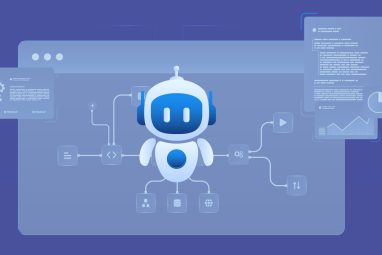
[Image source: Chetan Jha/MITSMR Middle East]
Sharjah is taking a significant step toward institutionalizing agentic AI within the public sector, following directives from H.H. Sheikh Sultan bin Mohammed bin Sultan Al Qasimi, Crown Prince, Deputy Ruler of Sharjah, and Chairman of the Sharjah Executive Council, to accelerate the emirate’s transition toward an AI-powered government.
The initiative positions agentic AI as a governance and capability-building agenda aimed at transforming how government entities operate, deliver services, and make decisions.
According to Sheikh Saud bin Sultan Al Qasimi, Director General of the Sharjah Digital Department, the programme represents the next phase of the emirate’s digital transformation strategy, with a focus on translating AI capabilities into measurable improvements in government performance and public value.
“Sharjah’s approach reflects a commitment to deploying agentic AI in a practical, responsible, and impactful manner,” he said, noting that the department will work with government entities and strategic partners to develop a framework aligned with the emirate’s priorities and institutional readiness.
Unlike conventional AI systems that primarily generate content or insights, agentic AI systems are designed to understand context, make decisions, interact with users, and autonomously execute tasks. Governments globally are increasingly exploring these technologies as they move beyond experimentation toward operational deployment.
The Sharjah Digital Department said agentic AI builds on foundations already established through the emirate’s broader digital transformation agenda, where AI capabilities have been integrated across digital services, data management, infrastructure, cybersecurity, and digital enablement programmes.
To support adoption, the department plans to pursue a dual-track strategy. In the short term, efforts will focus on awareness-building, readiness assessments, and early implementation initiatives across government entities. Longer-term work will center on identifying high-value use cases, evaluating organizational preparedness, and establishing the governance frameworks, safeguards, and enabling infrastructure required for responsible deployment at scale.
The strategy also emphasizes collaboration across government, academia, industry, and the wider community — an approach increasingly viewed as critical for addressing the technical, regulatory, and workforce challenges associated with next-generation AI systems.
Across the Gulf, governments are moving from AI experimentation toward implementation models focused on productivity gains, service modernization, and institutional capability development. As agentic systems mature, the challenge for public-sector organizations will be balancing automation and autonomy with governance, accountability, and human oversight.