
AWS CEO Remains Bullish on Middle East Despite Drone Strikes on Data Centers
Despite taking a hit, AWS is betting big on the region's long-term potential. On a global level, it is advancing its homegrown Trainium chips to rival major chip makers.
News
- Alibaba Unveils 2.4-Trillion-Parameter Qwen3.8 AI Model
- UAE Treats AI Literacy as a National Economic Priority: Report
- The Hidden Cost of Using AI at Work: It Might Be Making You Boring
- WEF Names UAE PASS a Global Benchmark for Digital Identity
- China's Moonshot Debuts Kimi K3, a 2.8T-Parameter Open AI Model
- 29 Countries Agree to Establish World AI Cooperation Organization
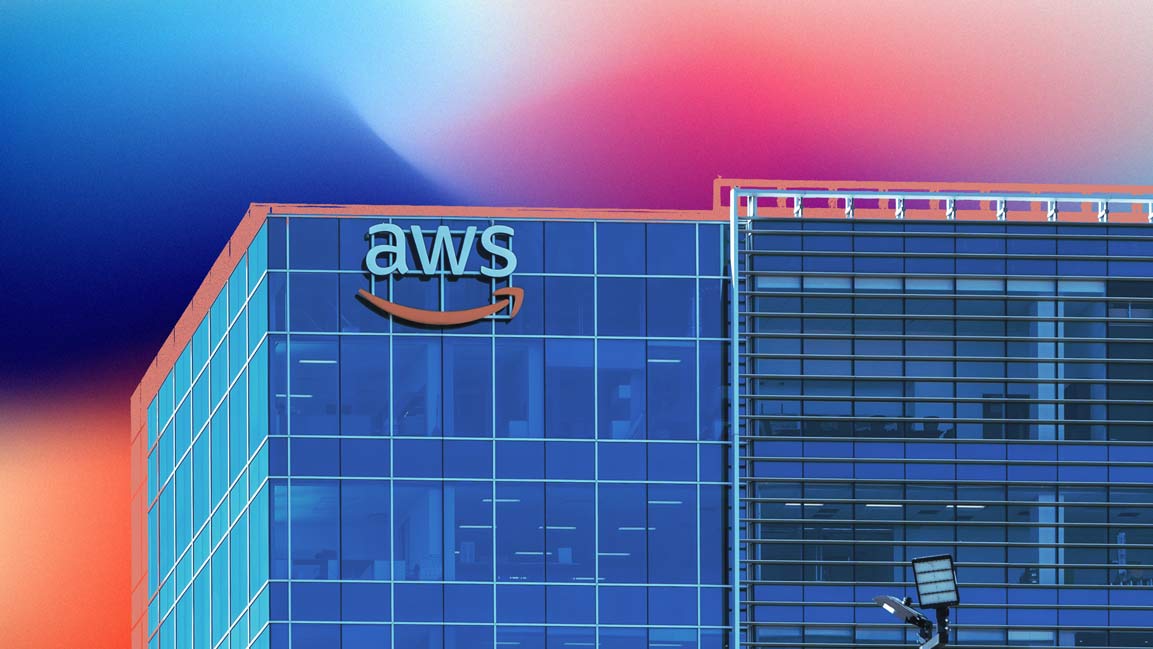
Image Credit- Chetan Jha/ MIT Sloan Management Review Middle East
The conflict in the Middle East has affected various industries and businesses throughout the region, with Amazon Web Services (AWS) experiencing a severe impact. Its data centers—two in the UAE and one in Bahrain—were directly hit by drones early in the conflict. Recently, Iran’s Revolutionary Guards announced that they had once again targeted an Amazon data center in Bahrain.
Even as the situation continues to remain uncertain, leaving the near future ambiguous, Matt Garman, CEO of AWS, has high hopes for business in the Middle East.
“We continue to be extremely bullish about our partnerships in the Middle East and about the long-term potential of the region,” shared Garman with Forbes. “Obviously, there’s conflict going on there right now, which dampens the very short-term aspects. And we think everybody hopes for a quick end to fighting, but it doesn’t really dampen our long-term views on the prospects of the region.”
Notably, the industry is “rethinking” cloud security amid rising global conflicts.
“The world went through a long period, starting before the Ukraine war, of not really having a lot of conflict between nations. And we see some of that ramping up,” he added.
Garman’s statement came hours before US President Trump’s two-week ceasefire announcement.
Given the decentralized nature of the cloud, customers can store their data in multiple locations, allowing businesses to move data operations to different locations during disruptions. “Otherwise they would have been down for months and months in conflict regions,” he notes.
AWS was estimated to have its UAE operations alone contribute $11 billion (AED 41 billion) to the national GDP between 2022 and 2036.
Data centers and cloud infrastructure require massive amounts of silicon chips, which are largely provided by rivals NVIDIA, TSMC, Broadcom, Samsung, and Intel. Amazon entered the race with Trainium. Released in 2020, the chips were criticized for poor performance. However, in 2026, Amazon is optimistic about the role its chips will play in the long run.
In his letter to shareholders, Amazon CEO Andy Jassy presented Trainium as a formidable rival and discreetly warned its competitors.
Calling its chip business “on fire”, he acknowledged that virtually all AI was done on NVIDIA chips, “but a new shift has started.” The Jensen Huang-led chip maker will always be a leading name; however, customers are now looking for better price-performance.
“Our second version of our custom AI silicon (Trainium2) had about 30% better price-performance than comparable GPUs, and has largely sold out. Trainium3, which just started shipping at the start of 2026 and is 30-40% more price-performant than Trainium2, is nearly fully-subscribed,” he said.
Notably, its primary inference service, Amazon Bedrock, runs most of its inference on Trainium.
Jassy also drew a parallel with Intel’s Graviton CPU. “In the CPU space, virtually all of the workloads ran on Intel chips until we invented Graviton in 2018. Graviton, which has up to 40% better price-performance than other x86 processors, is now used expansively by 98% of the top 1,000 EC2 customers.”
Amazon’s chips business—spanning Graviton, Trainium, and Nitro—surpassed a $20 billion annual revenue run rate, growing at triple-digit year-over-year rates.
In its spatial updates, Amazon announced its Amazon Leo, a competitor to Elon Musk’s Starlink, set to officially launch in mid-2026. Meanwhile, it is forging key partnerships and has won contracts from Delta Airlines, AT&T, Vodafone, Australia’s National Broadband Network, and NASA, among others.
Calling AI a once-in-a-lifetime opportunity, Jassy reassured investors that the bets weren’t being made blindly. “We’re not investing approximately $200 billion in capex in 2026 on a hunch,” he said, adding that “there are several other customer agreements completed (and unannounced), or deep in process.”