
Nvidia Rival Etched Steps Out of Stealth With $5B Valuation
The startup believes today's AI chips are held back by memory and networking bottlenecks—and has built two technologies to address them.
News
- Nvidia Rival Etched Steps Out of Stealth With $5B Valuation
- Abu Dhabi's MGX Closes $49B AI Fund, Exceeding Target
- Saudi Arabia Tops Global ICT Development Index
- Cloudflare Puts Publishers in Control With Default Block on AI Web Crawlers
- AI Now Helps Decide Who Gets Hired, Promoted, and Laid Off in the UAE, Reveals Survey
- UAE Deploys First AI Agents for Weather Forecasting
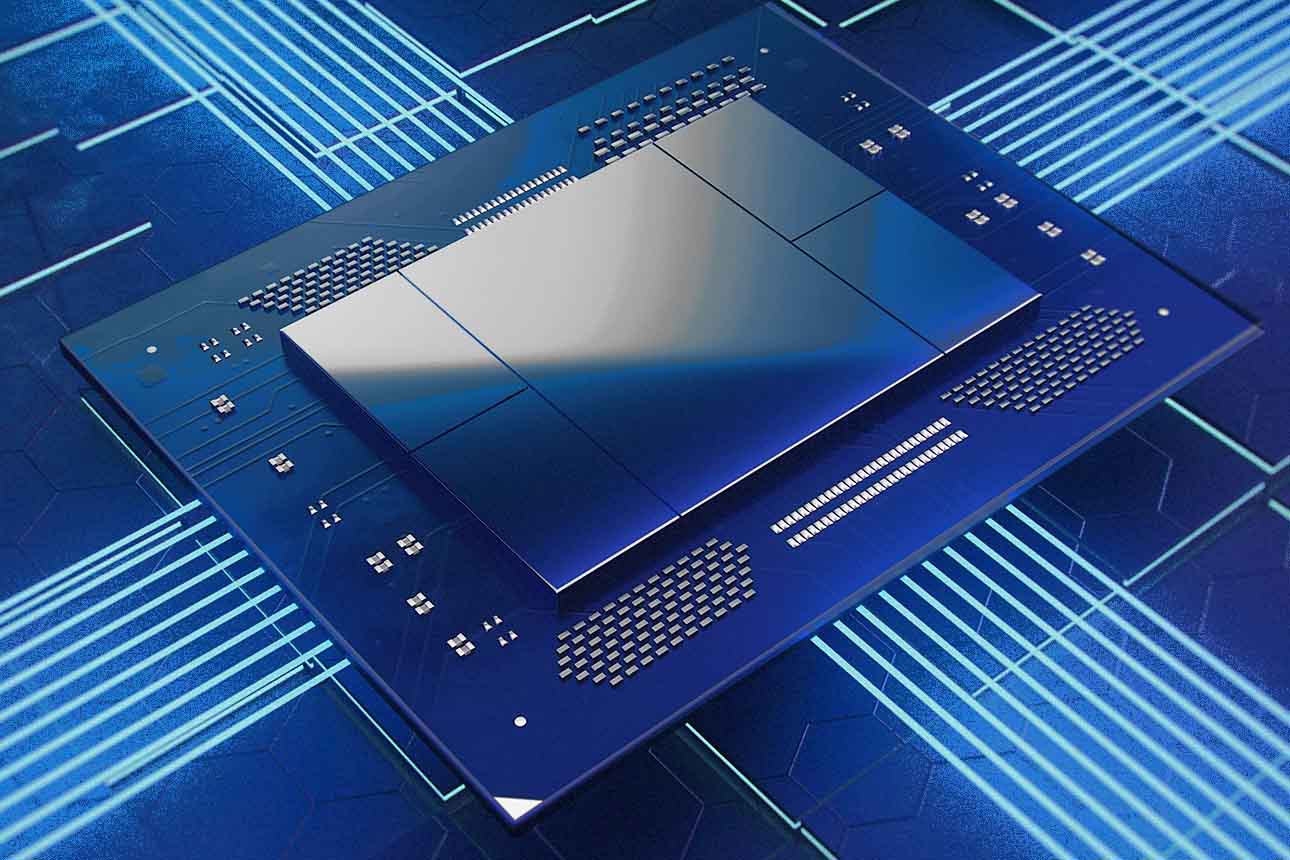
Nvidia is about to face a new challenger in the AI chip race. California-based Etched says it will begin shipping its first chips in limited volumes this summer, marking a key milestone for the company as it emerges from stealth with $800 million in funding.
“We’re coming out of stealth,” the startup wrote on LinkedIn. Founded in 2022, Etched revealed that its previously undisclosed $500 million funding round in December valued the company at $5 billion post-money.
This includes a strategic investment from VentureTech Alliance, along with Peter Thiel, Jane Street, Hudson River Trading, Jump Trading, Two Sigma, Stripes, Ribbit Capital, Radical Ventures, Primary VC, Positive Sum, and AI luminaries including Andrej Karpathy, Geoffrey Hinton, Fei-Fei Li, Stanley Druckenmiller, Arthur Mensch, Scott Wu, and more.
Etched announced it has built its first racks—highly specialized server cabinets designed to accommodate the extreme density of GPUs, CPUs, and memory—following a successful A0 tapeout, the final stage of chip design before manufacturing, on TSMC’s N4P process.
With a team of over 400 engineers, the startup envisions “pushing the entire Pareto curve on frontier models, including many-trillion-parameter MoEs, long context, and agentic workloads.”
With AI chips not achieving their advertised speed in real-world use, Etched is targeting two different bottlenecks with two separate innovations.
To fix the “throttling” problem, it has designed Low-Voltage Inference as a solution that will run the chip’s math blocks at under half the voltage of most AI chips. At lower voltage, less heat is generated, leading to less throttling and higher sustained speeds for longer.
Users have to choose between large-capacity, slower memory and fast, limited-capacity memory. With Cluster-Scale Memory (CSM), Etched links chips via a proprietary high-bandwidth interconnect, creating a shared memory pool across an entire cluster.
“We recognized early on that frontier AI would become one of the most economically significant technologies ever created, but that the infrastructure needed to serve those models in a sustainable and economically viable way simply did not exist,” said Gavin Uberti, co-founder and CEO, Etched.
“As AI rapidly embeds in every industry and application, the need for accelerated inference infrastructure has never been greater.”
The startup has already booked over $1 billion in customer contracts.
“Our approach from the beginning has been to build for gigawatt-scale,” said Rob Wachen, co-founder of Etched.
“Production is the product. We are living through one of the largest infrastructure buildouts in history, and the companies that matter will be the ones that can translate technology into systems that can be manufactured, deployed, and operated at massive scale. We’re as focused on operations as we are on frontier research.”
The startup has also built a 2MW data center at its office and opened a Taiwan factory for 24/7 engineering. Etched becomes one of many rising to compete with Nvidia as demand shifts from training AI models to inference.