MIT & IBM Expand Partnership with Quantum-AI Research Hub
The lab will lead research in AI and quantum computing and redefine the mathematical foundations across both domains.
News
- Research Highlights a Growing Disconnect Between AI Adoption and Workforce Strategy
- UAE Introduces AI-Generated Spokesperson for International Outreach
- Governments Must Lead on AI Governance Instead of Ceding Responsibilities to AI Labs, Says Sam Altman
- AI Dispatch | AI’s Power Players Double Down
- Anthropic Joins Frontier, Signaling AI's Entry Into Carbon Removal Markets
- 42% of Middle East Employers Are Drowning in AI-Generated Job Applications, Survey Reveals
[Image source: Chetan Jha/MITSMR Middle East]
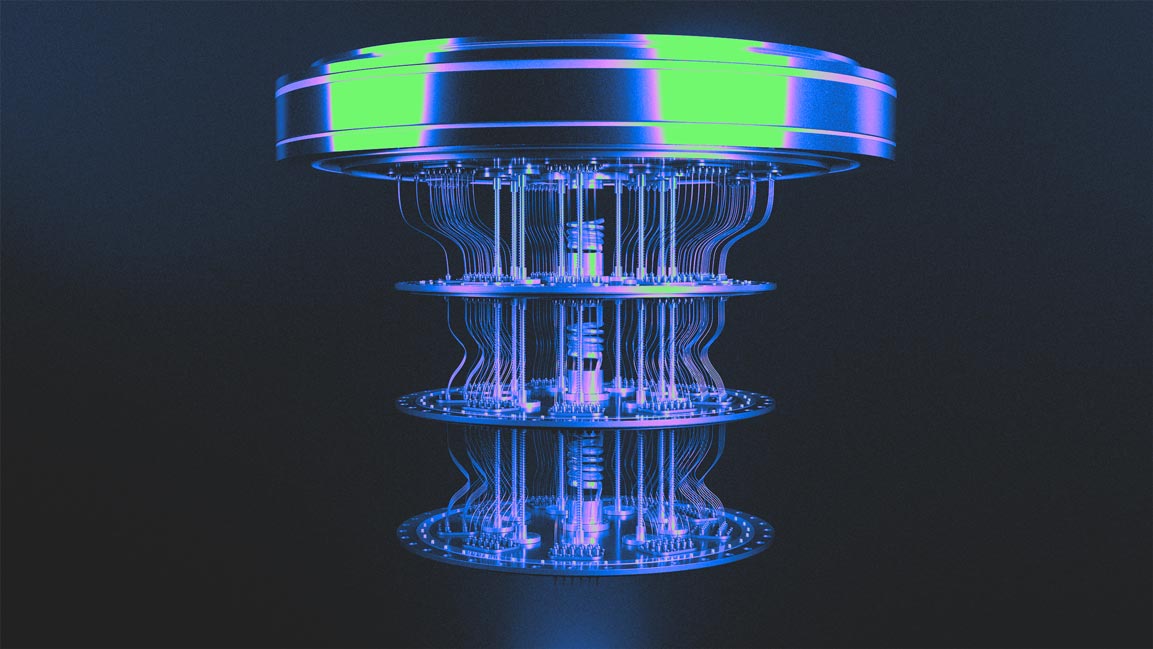
Technological progress relies on collaboration rather than isolation, with academic partnerships being crucial for translating innovation into tangible results. In line with this, IBM and the Massachusetts Institute of Technology have established the MIT-IBM Computing Research Lab to promote collaborative research and drive the future of computing.
The new lab will serve as the central hub for collaborative research in AI, algorithms, and quantum computing. It will expand to include foundational AI research aimed at developing new computational methods that go beyond the capabilities of current classical systems.
It will also look into integrating these technologies into hybrid computing systems.
“We expect the MIT-IBM Computing Research Lab to emerge as one of the world’s premier academic and industrial hubs, accelerating the future of computing,” said Jay Gambetta, director of IBM Research and IBM Fellow, and IBM chair of the MIT-IBM Computing Research Lab. “Together, the brightest minds at MIT and IBM will rethink how models, algorithms, and systems are designed for an era that will be defined by the sum of what’s possible when AI and quantum computing come together.”
Notably, IBM has laid out a roadmap to deliver the world’s first fault-tolerant quantum computer by 2029.
“For a decade, the collaboration between MIT and IBM has produced leading-edge research and innovation, provided mentorship and supported the professional growth of researchers both at MIT and IBM,” said Anantha Chandrakasan, MIT’s provost, who, as then-dean of the School of Engineering, spearheaded the creation of the MIT-IBM Watson AI Lab and will continue as MIT chair of the lab. “The incredible technical achievements set the bar high for our work together over the next 10 years. I look forward to another decade of impact.”
The lab will complement and enhance the work of two of MIT’s strategic initiatives, the MIT Generative AI Impact Consortium and the MIT Quantum Initiative.
It will build upon a distinguished history of scientific excellence, bridging cutting-edge research and academia, and finds its provenance from the MIT-IBM Watson AI Lab, which originated in 2017 on MIT’s campus.
MIT and IBM aim to lead research in AI and quantum computing and to redefine the mathematical foundations across both domains.
The research will expand AI capabilities by integrating AI with traditional computing, while advancing small, efficient, modular language models, novel AI computing paradigms, and enterprise-grade systems optimized for real-world deployment—prioritizing reliability, transparency, and trust.
Parallelly, it will reconceive the mathematical and algorithmic foundations, serving as the building blocks for the next era of computing by accelerating the development of novel quantum algorithms for complex problems, with impacts across materials science, chemistry, and biology.
It will also prioritize training of the next generation of computational scientists and innovators.
Jacob Andreas (EECS associate professor) and Kenney Ng (IBM Research principal scientist and MIT-IBM science program manager) will co-lead AI; Vinod Vaikuntanathan (EECS Ford Foundation Professor of Engineering) and Vasileios Kalantzis (IBM Research senior scientist) will co-lead algorithms; and Aram Harrow (physics professor) and Hanhee Paik (IBM director of Quantum Algorithm Centers) will co-lead quantum.